TI Lab / RESEARCH

Research areas

We investigate liquids, glasses, and colloidal dispersions to understand how disordered microscopic structures and their dynamics give rise to macroscopic physical properties.

01

Liquid Structure & Dynamics

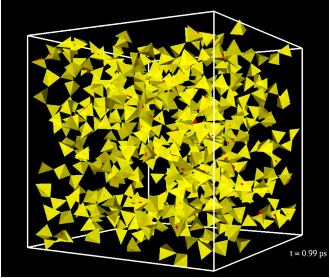
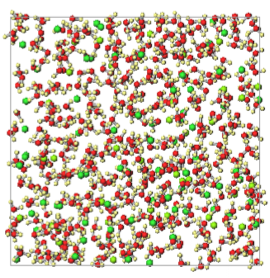
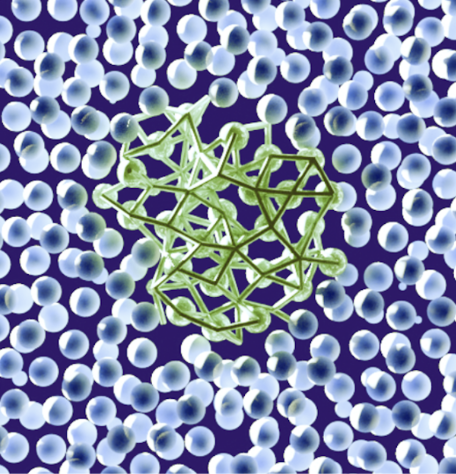
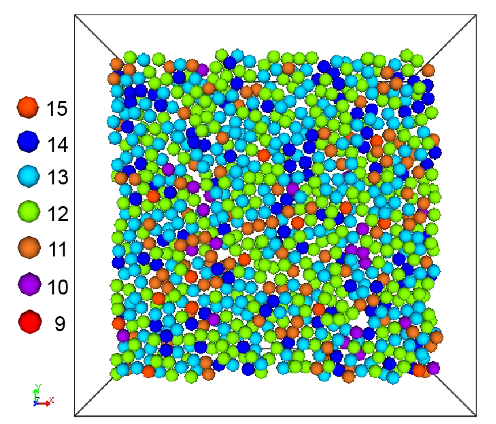
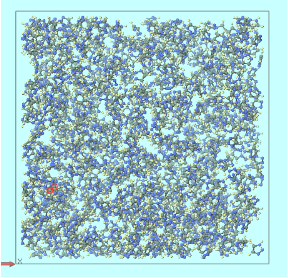
Atoms and molecules in liquids are constantly moving within disordered structures. We use the van Hove correlation function (VHF) to describe atomic and molecular correlations in real space and real time. By combining inelastic X-ray scattering (IXS) with numerical simulations, we investigate collective atomic motion and local structural changes in liquids.

We also study the microscopic origin of viscosity through local configurational excitations (LCEs), associated with changes in nearest-neighbor configurations. The correspondence between the characteristic timescale of LCEs and the Maxwell relaxation time provides insight into the relationship between microscopic structural changes and macroscopic fluidity.
02

Glasses & Amorphous Materials

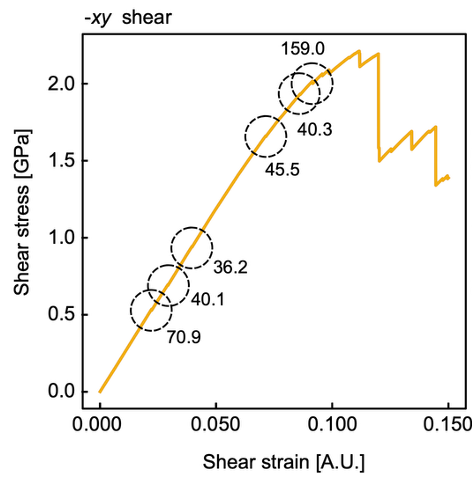
Glasses and amorphous materials lack the periodic atomic arrangement found in crystals, and their mechanical properties are closely related to microscopic structure and atomic dynamics. Focusing on metallic glasses, we investigate local structure, dynamical heterogeneity, and atomic rearrangements during deformation.

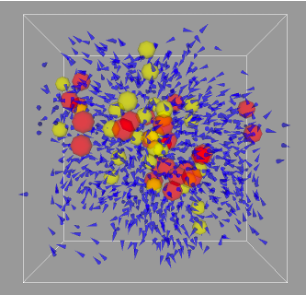
In particular, we examine local configurational excitations (LCEs) and deformation-induced structural anisotropy to understand the relationship between local atomic rearrangements, cooperative motion, and plastic deformation. Our goal is to understand the macroscopic mechanical properties of glasses through these microscopic processes.

03

Charged Colloids & Soft Matter

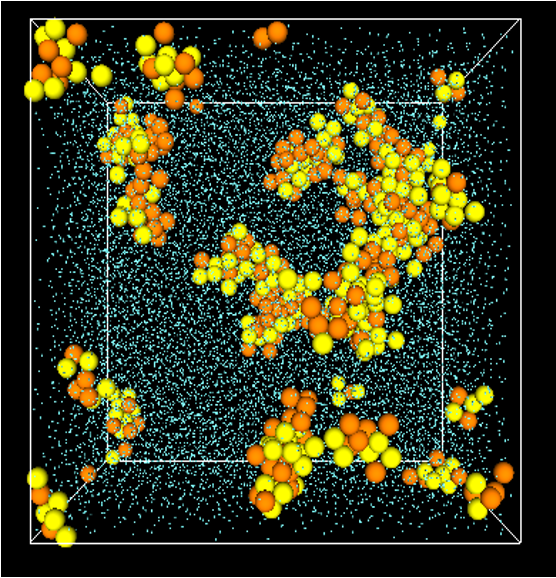
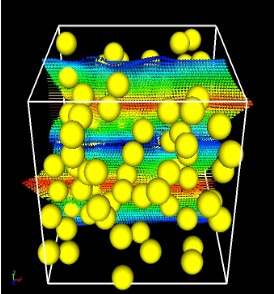
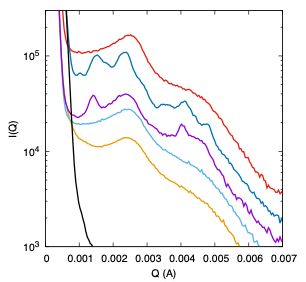
In charged colloidal dispersions, particle surface charges and ions in solution modify interparticle interactions, thereby affecting the structure, dynamics, and flow behavior of the system. We combine experimental measurements of pH, electrical conductivity, and rheological properties with theoretical modeling and numerical calculations to investigate particle charging, electrostatic screening, and interparticle interactions.

In particular, we focus on interaction-induced glass transitions to understand how changes in structure and particle dynamics give rise to viscosity and non-Newtonian flow. Our goal is to elucidate the microscopic origins of rheological behavior in colloidal dispersions.

SELECTED PUBLICATIONS

Selected Publications

01

Liquid Structure & Dynamics

  1. Atomic mechanism of flow in simple liquids under shear

    Physical Review Letters2012

    DOI ↗
  2. Seeing real-space dynamics of liquid water through inelastic x-ray scattering

    Science Advances2017

    DOI ↗
  3. Viscosity and real-space molecular motion of water: Observation with inelastic x-ray scattering

    Physical Review E2018

    DOI ↗
02

Glasses & Amorphous Materials

  1. How thermally activated deformation starts in metallic glass

    Nature Communications2014

    DOI ↗
  2. Crossover from localized to cascade relaxations in metallic glasses

    Physical Review Letters2015

    DOI ↗
  3. Cooperative atomic motion during shear deformation in metallic glass

    Nature Communications2026

    DOI ↗
03

Charged Colloids & Soft Matter

  1. Direct numerical simulations for non-Newtonian rheology of concentrated particle dispersions

    Physical Review E—Statistical, Nonlinear, and Soft Matter Physics2009

    DOI ↗
  2. Local elasticity in nonlinear rheology of interacting colloidal glasses revealed by neutron scattering and rheometry

    Physical Chemistry Chemical Physics2019

    DOI ↗
  3. Scaling of shear rheology of concentrated charged colloidal suspensions across glass transition

    The Journal of Physical Chemistry B2022

    DOI ↗